
 Posts
Posts


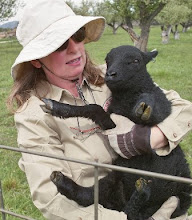
Well there has been another major food contamination issue with meat. The largest ever beef recall for E. coli contamination. I want all of you to look a bit behind the headlines to see the system that allowed that to happen, what problems it presents for small farmers and how you can help keep your food safe.
No one disputes that the actions and contamination are serious and the animal welfare issues are significant. But why did they occur? The American consumer must share the blame for the problem. The huge push to get their food cheaper and cheaper has led to the systems breakdown that caused the problems. By wanting really cheap food the consumer has set a limit on what they will pay for. Yet the demand is there so the companies look for ways to cut costs to meet the demand. A lack of government funding for inspectors led to inspection delays. No real good traceability of the individual animal into the constituent parts means that if there is one bad one it affects and contaminates many thousands of pounds of meat.
I think the issue all started when we decided that in pursuit of low cost we'd let our manufacturing jobs go overseas. Globalization is nearly always a disaster when it's for basics and staples. When we lost those highly paid, skilled jobs the workers in the service industry had lower incomes driving food prices down. A factory worker in the early 1950's with a high school education could afford a car, a house and good food. But when you lose the manufacturing you move to service industry work which is lower paying, less skilled and the jobs are less reliable.
The push for bigger houses, more cars, more consumer goods at an ever decreasing price puts pressure on the companies to cut corners and costs. Open borders to basic goods from other countries mean we are forcing our workers to compete against places where the wages, standard of living and benefits are all much worse than in the US. That's why big companies want to move to other countries, lower costs, but at what price not only to our own workers but to the workers there.
The speed with which a big slaughter plant is forced to move nearly requires that workers push animals faster than they want to go. Any fearful or slower animal can get hurt or go down and yet there is no provision for working the animals calmly. To their credit many big plants have worked with Dr. Temple Grandin to develop less stressful handling systems but not all do and if the workers are not allowed the freedom to slow the process down or stop it if necessary all the good design in the world goes down the tubes. When faced with one very fearful and belligerent steer holding up the line the temptation is to move it along no matter how it gets done because the company will not accept a slowing down of the slaughter line. And with fewer and fewer people active in or living on farms there is a significant lack of knowledge by many people in how to move and behave around animals in a way that provides a calming influence. Anyone raised on a farm learns rather quickly the best way to get the stock to do what you want with a minimum of fuss, but we don't train our slaughter workers in stock handling but treat them like assembly line workers dealing with a car body.
Now come the calls for change, increased regulation and the like.
Well I have a very different idea of what we ought to do. I doubt if any politicians will support it yet I am convinced that it would make our food supply safer.
First : We need much more slaughter capacity. The regulations are so onerous now that only a huge plant processing hundreds of animals a day can support the overhead. I am willing to agree that more inspections are good, but I also know that it is possible to produce safe healthy meat products in ways that do not meet the USDA regulations. Any hunter knows that a carcass can cool over a longer time and still be safe. It's possible to process an animal in the field in the open and yet never have a contamination problem. In fact one of the best disinfectants known is sunlight but the US will not allow any processing to be done outside at all. At a minimum we should allow that any plant that is considered safe to process game meat for human consumption, or do custom processing of livestock should be allowed to package the meat for wholesale and retail sale. Ideally any farmer willing to maintain a food handlers license should be allowed to process and sell both retail and wholesale his or her own animals both as whole animals and retail cuts. We have to schedule our slaughter dates 12-18 months in advance. Think about it. I have to guess at the water, the grass growth, the lambing rates and figure out how many animals I will have finished and ready to slaughter before I have even finished butchering last years crop. I cannot get additional dates so I tend to schedule lots of them and then cancel dates if the animals are not ready. If I have a special customer request for a particular special cutting order I cannot accommodate it unless there is a slaughter date coming up soon. With such long lead times I and other farmers end up booking the butcher in advance and yet they are never sure if we will be ready for them and exactly how many we will bring on any given day. The excess dates I have to reserve make accurate scheduling a problem for the plant. More choices and more capacity would mean that I could schedule slaughter a month or a few weeks before the animals go and allow me to be more accurate to the plant on exactly how many are coming in on a particular day.
Second: Increase the identification requirements. I would like to see every single package of meat include the animal tag number on it and a place to track back to where that animal was born, raised, fed out and slaughtered. If the animal is processed on-farm under the rule above then the farmer address and contact info needs to be on every piece of meat sold. There is no reason we cannot implement that requirement especially in the smaller plants. Custom butchers are already skilled in processing a single animal at a time and keeping each and every carcass identified. With that level of tracking there is no reason why any current custom butcher cannot produce food that is at least as good a quality as the big plants and I would be willing to bet a sheep that it would test out cleaner with less bacterial contamination than even the best big plants.
Third: Replace inspection with testing. Instead of requiring an inspector have samples taken randomly of products and they must meet the contamination regulations. If you meet the rules you can sell your meat to any consumer, restaurant, wholesaler or store.
Fourth: Eliminate the restrictions on selling meat across state lines. If it's processed in a safe fashion there should be no restrictions on where it's sold.
Fifth: Eliminate the restrictions on how meat is packaged and who can buy it. Right now a farmer can process at the farm a certain number of poultry and sell them as whole birds only to direct consumers. If it's safe to do that, and the thousands of birds eaten annually that are processed that way prove it is safe, then that same farmer should be allowed to cut up the chicken into pieces and sell pieces individually both to consumers and to restaurants and other wholesalers. The birds or parts must be identified with the name and farm of the person who raised and slaughtered the bird. All the same options should also be available for the processing of all livestock species not just poultry. It's just as easy to properly process a sheep or a steer if you have the right equipment.
Sixth: Require the same level of care and regulations for any species that is eaten. Bison, rabbit, elk and all other alternative species should be held to the same regulations as their standard domestic counterparts when it comes to slaughter handling and safety but they are not. Some are more restrictive, elk must be tested for CWD before the carcass is cut while some are less restricted. All species should be treated the same. If there are individual disease issues that only affect a single species then address those individually but the basic regulations should be identical.
Seventh: Allow for any additional testing that any specific farm or processor want to do. The big hassle that occurred when a company wanted the right to test every steer for BSE is ridiculous. It doesn't matter if the USDA says it's not necessary, if the farmer or processor has customers who want the assurance of individual testing it should be allowed not prevented.
Eight: Eliminate the restrictions on what parts can be sold. Right now it's not legal for most plants to process sheep intestines for sausage casings. Or to provide the caul fat or many of the offal cuts like lights, sweetbreads etc. if someone wants them. Why not allow any part of an animal that the consumer wants to buy be available?
Implementing these changes would serve to distribute the food processing system. A distributed system is more stable and robust and less subject to catastrophic failure. If one plant has a contamination issue the labeling requirements would allow for the quick and simple identification of the affected meat without affecting other plants in the area. Increasing the slaughter options means that fewer animals have to be processed at any one place thus both limiting the time constraints and the contamination possibilities. Standardizing the regulations across all species eaten is just common sense. Why there are different regulations is beyond me.
Give farmers the tools we need to provide meats in a safe manner in a variety of ways and the consumer will have more choices.
However there is a cost, a big one. This is much more expensive than the lowest cost approach of the big plants. Smaller plants have to have workers skilled in a variety of jobs not just how to efficiently make one or 2 cuts on every carcass that passes them. That means training them in meat cutting science and it's not cheap. Small plants will also process fewer animals in a day so that means their prices will be higher on a per animal basis and those costs must be passed on to the consumer. However we will gain in less transportation costs as animals are slaughtered closer to their finishing farm and meat sold locally as well so the total dollar increase may not be as much as the big plants would have you believe.
So do write your various government officials about the problems but propose new and innovative solutions like mine rather than more of the same. We should have learned by now that verticle integration and big plants is a disaster when it comes to food safety. Our worst contamination problems come from large plants not small ones yet the small plants are going out of business under the weight of ill conceived regulations that do not prevent the safety issues they are designed to address.
We need a new system and the consumer will have to require it.
Showing posts with label rant. Show all posts
Showing posts with label rant. Show all posts
25 February 2008

24 October 2007
Back on Pasture and Why Labels are Misleading

The early snow has pretty much all melted and we got one batch of ram lambs back out on our triticale pasture regrowth. We made sure they were all pretty full with hay before putting them out and made an aisle of electric fence to prevent too much pugging of the permanent pastures. We'll bring them back in to the corrals at night to reduce predator pressure. Our plan is to replant this to permanent pasture in the spring so any pugging that happens now won't matter and I'd rather the feed go into sheep rather than be wasted.
This brought up an interesting dilemma regarding labeling of food products. I've already explained why I consider USDA Organic regulations to be cruel and inhumane for livestock. However, there are other labels that we might qualify for that we have so far not used. Terms like free-range, cage free, no hormones, vegetarian diet and the like are all potential ways to describe our products.
Grass-fed has up until now not been regulated by the federal government. That has changed and there is now a new Federal grass-fed standard. I'll talk a bit more about it in a later entry.
The American Grassfed Association has developed a very strict interpretation of grassfed that limits feeding of stored forages and use of winter corrals. It's a nice idea but we'll never qualify. The sticking points for us are "All livestock produced under this standard must be on range, pasture, or in paddocks for their entire lives. This means that all animals must be maintained at all times on land with at least 80% forage cover or unbroken ground." and "AGA grassfed ruminant animals cannot be fed stock-piled forages in confinement for more than 30 days per calendar year. "
The limit of 30 days confined feeding is not necessarily enough to protect our pastures from severe pugging and erosion in wet, muddy times. Our attempts at feeding hay on our pastures resulted in destruction of the pasture in that area for a year or more. Our heavy clay soils are the most likely culprit in the problems and compaction we experienced. The people I know who are successfully meeting those restrictions either have sandy soils or have large areas they can plow for annual crops and so use those for their feeding of stored forage on pasture to meet the no confinement requirement. I had hoped to be able to do this on our farm with a multi-year rotation that would include brassicas and small grains like oats and triticale as pasture for our sheep. In addition to providing feed during our summer slump it was also going to help extend the grazing season into fall and provide a way to feed hay on pasture in winter reducing VM contamination of our wool.
Unfortunately we learned by trial and error that plowing our fields only plows up a new crop of rocks. We've been talking to people who have tried no-till but so far everyone has said that nothing they've tried works in our soils with our huge rocks. The giant rock walls that ring our pastures haven't really made a dent in the rock component of our soil. There is a reason that our mesa has always been planted to perennial crops like fruit trees, hay or more recently wine grapes. So we use our winter corrals as places to put sheep when the pastures are too wet or muddy to safely graze and use stored hay forage as needed when pastures are dry or not growing. Now if we sold primarily lambs we could get them to qualify as from birth to harvest they would meet all those restrictions. But our primary product is mutton, an older sheep that for us is usually 18-36 months old and has experienced at least one winter here. Many of our butcher animals are old ewes or rams who have performed other jobs for us and now go on to their final and in many ways most important job, providing tasty mutton for our customers and ourselves.
The new federal grass-fed standard requires that animals get 99% of their feed from pasture or hay and that they are on pasture from the time of the last frost in spring until the first frost in fall. So what does it mean when we pulled sheep off before first frost because the pastures were too wet, and yet now after a major frost have some back out on pasture? I would maintain that long term sustainability means we take good care of our land so that it continues to be productive for generations. A rigid standard that ignores individual farm conditions seems counterproductive. Certainly other farms in our valley can plow regularly and can plant crops without encountering huge rocks. But those farms are on the other side of the valley, not here. Yet our farm is highly productive when I work with the soils growing permanent crops with only very rare plowing. Shouldn't labels designed to promote healthy food and better land stewardship be flexible enough to account for what's best for an individual farm?
What about other labels like free range or cage free for poultry and no hormones or antibiotics?
Free range is federally controlled. The definition of free range for poultry is that the birds must have "access to the outside" No indication of for how long, or how much and certainly no real requirement that they be outside once they are done brooding. And since the time from the end of the brooding period until the time to slaughter for most commercial broilers is so short even if they were outside they won't get very much time there. In short, many birds can be labeled free range when all that it was was an open door at the end of a broiler house for the last week or so of their lives. Since free range doesn't mean what people think it means we have generally avoided it unless we qualify it by explaining that our birds are "really free ranged" and explain the legal defintion plus what we do. We have picked a slower growing commercial cross that we don't butcher until 14-16 weeks of age. Our chickens are outside during the day but penned at night for predator control. When outside they are free to get into everything and do. Our birds range freely over the farm eating all sorts of stuff.
Cage free only means no cages. Most birds are now raised cage free. But they are still in indoor confinement sheds with thousands of birds. Cage free does not mean outside access. So be aware when you purchase eggs or meat from "cage free" birds.
Vegetarian diet is another one that is commonly used. For ruminants like our sheep a vegetarian diet is the natural diet. Geese too are almost exclusively vegetarians and will only rarely eat insects. But what about chickens or ducks? One of the best fly controls is to have chickens range behind the grazing ruminants and scratch and eat the fly larvae and adult flies on a regular basis. Ducks can be important in preventing liver fluke infections by eating the snails that are an intermediate host. Using these natural parasite controls only makes sense but doing so means those birds can no longer be said to be raised on a vegetarian diet. Yet vegetarian diet is promoted as natural for chickens when it isn't really their preferred way to eat.
No added hormones is a difficult one as well. It is illegal to add hormones to poultry or pig feeds or to give them any so a no added hormones label on either pork or any poultry is irrelevant. Yet it does make sense for ruminants like cattle and sheep. Dairy animals are the ones most commonly given additional hormones and many people prefer to avoid them. So whether the label is meaningful depends on species. For the record we do not give our sheep hormones except when used to bring them into heat for artificial insemination, a procedure we use very rarely and so far only with imported semen from UK rams.
What about no antibiotics? Poultry is routinely given antibiotics in the feed from birth to death. Pigs too are often given low levels of antibiotics in the feed. They are also used in ruminant feeds. All of these applications are potential problems. While they do increase weight gains, and therefore farm income it's certainly not in the best interests of the animals or the consumer to eat constant low levels of antibiotics. Yet if an animal is injured or sick antibiotics are a necessary part of humane care. For us here is a recent example. One of our ewes, Ann, got severely injured. We found her with the inside of one front leg with no skin from the knee up to her elbow. The missing skin area was as if someone had skinned her leg. She was put in a small pen and the injury bandaged. There was no skin to put over the wound, it was gone, so as a precaution she was on a course of injected antibiotics for 10 days with pain medication as required to keep her comfortable. We also used an antibiotic and antifungal ointment on the wound at each dressing change to prevent any problems. She is making a full recovery, there is no nerve damage and there is good scar tissue over the whole area. We fully expect her to be fine in another couple of months. She raised two lovely lambs for us and is a wonderful young ewe that is worth the extra effort and care. However she will eventually be a slaughter animal. We hope it will be many years but there is always the chance she will do something that puts her on the butcher list, fails to care for a lamb, starts eating trees, causes a significant problem with her behavior or the final cause, getting so old that she has lost too many teeth to be able to eat. When that happens she wil be put on the trailer to be processed into mutton for our customers or ourselves. Should we prevent her from ever fulfilling her final job due to an injury and succesful treatment years earlier? By all the rules of all the various labels she could never be used for meat due to the antibiotic use while treating her injury.
The bottom line for us is that we want our customers to ask questions and talk to us about how we produce and care for our animals. We automatically double the federal slaughter withdrawal from any drug, dewormer or vaccine we use but we will always provide the best and most humane care we can for our precious sheep. But we are unlikely to promote federally regulated labels unless there is no way we would ever have to compromise those standards. For us the higher goal is long term sustainable food production given the limits and challenges of our particular farm, soils and climate.
26 September 2007
US Organic is Cruel and Inhumane for Livestock
US Organic is Cruel and Inhumane for Livestock
The above statement will shock many and be denied by others. The US standards for organic production of livestock are cruel and inhumane. They are a travesty of what organic should be.
In an ideal world buying organic would mean the products you purchase are produced in a fair manner, provide a decent living for the farmer and improve the fertility and long term sustainability of the farm land. There should be no bad environmental effects caused by the farm’s management practices and it should be a thriving, long term sustainable food producer for many generations to come.
Many people think that organic means no sprays, no chemicals and no treatments for the problems that beset agriculture. However, organic does in fact allow and use many chemicals. Some of them are actually more toxic and lethal than their non-organic counterparts. The difference is that organic treatments are natural and not synthetic. All of agriculture defines the time between when a treatment can be given to a crop and when it is safe for humans to eat or otherwise contact that crop. Organic pesticides can have longer withdrawal times for both handling and harvest and for entry than non-organic counterparts.
Domestic animals should be free to express natural behaviors, protected from disease, parasites, predators and illness, eat natural foods appropriate for their species and sheltered for their well being. All these requirements should be adjusted to reflect the vast differences in farms, soils, breeds and species and should reflect the diversity that is the birthright of many thousands of years of agriculture.
In many ways the organic vegetable and fruit growers are working towards this goal but the US standards for livestock are woefully lacking in common sense and good animal husbandry.
Under US organic rules no slaughter livestock can be given any sort of paraciticide at all. On the surface this sounds reasonable - after all with proper management there should be no parasites in your stock right?
WRONG! While there is much in livestock management that can be done to minimize common parasite infestation of your stock there is no way to prevent it completely. All livestock is eventually slaughter stock, a responsible farmer will make certain that the animals are healthy AND free of medications before they go to the stock yard. Parasite infestation causes not only significant harm to the individual animal and can cause death but even animals that do not die fail to thrive. This affects not only the quality of the wool, meat and milk from infested stock but causes unnecessary discomfort, shortens their lifespan and can cause significant loss of young. Increased costs to raise replacements is a hidden but significant cost in a flock that is heavily parasitized.
Parasites in sheep can be broadly classed into several main groups.
There are intestinal worms - round worms and tapeworms that can infest stock. Flukes can infest the liver, lung worms can infest the bronchial passages and meningeal worms can infest the nervous system. External parasites include ticks that can carry several different virus diseases, sheep keds and lice in two varieties. And there are the hybrid parasites such as the bot fly which lays eggs in the sheep’s nose; the grubs eat blood from the nasal passages and will cause internal damage if they get into the stomach. Some bot flies are viable in humans and other animals. Warble flies are another hybrid style of parasite.
There are many techniques the farmer can do to reduce intestinal worm infestation in their stock. Proper grazing management combined with a large enough area to rest pastures, a hard freeze cycle and using other species such as chickens, geese or cattle can help break the life cycle of intestinal parasites. If the land can be grazed by both cattle and sheep a farmer can use the cattle to sweep the pastures of the primary sheep parasites and vice versa. The animals are still infested, it just will reduce the losses caused by the parasites. Proper grazing management can make a huge difference in the intestinal worm burden of a flock.
One technique, FAMANCHA, is used to detect individual animals that are infested with the barber pole worm. While touted as the solution to parasite problems this only works with one, specific species. However, if you are in an area that has barber pole worm, using FAMANCHA can help you reduce the amount and number of times you must deworm the flock and target the drug to only those animals that need it. Knowing the animals are infested is useless unless something is done to kill the parasites without killing the animal.
Breeding for sheep that are somewhat resistant to parasites can and does work, for the farm where the animals are selected. However, significant research in Australia and New Zealand indicates that animals bred to be resistant to parasites on one farm may not be resistant to the ones found on another farm so while helpful for the farmer in reducing their individual use of dewormers it is not a total solution.
All of these techniques can and should be used by all sustainable farmers to mitigate the problems caused by intestinal worms.
Nothing in an individual farmers' grazing management can do anything about the parasites carried by the wild animals and transmitted to the domestic stock.
The meningeal worm is commonly carried by deer. Sheep are a dead end host when infected because unlike deer they can die from the infestation. Nose bots are a serious problem in some areas and because they are the larval form of a fly the individual farmer cannot control it. We personally have lost sheep who died from nose bot infestation. Liver flukes are another parasite carried by deer and elk.
There is very little that farm management can do to curtail external parasites.. Shearing at the proper time and providing clean bedding is about the limit of management that can be used to prevent infestation by lice, keds and ticks. Fortunately, such infestations tend to be rather rare. In our own flock in the last 8 years we have only had to use an insecticide on our sheep twice. In modern agriculture the old sheep dips have been replaced with much smaller doses of targeted insecticides. Most are based on pyrethins, a natural insecticide in chrysanthemum plants but for consistency and safety a synthetic version is used. Natural pyrethins can vary in lethality and that makes deciding on the dose of a natural pyrethin very difficult. You must use enough to kill the parasite but not enough to kill the animal. Synthetic pyrethins are consistent in drug effect and can be administered more safely.
Given that all domestic stock will become infested with parasites it is critical that organic standards provide a safe effective way to deal with these pests when management is not effective or when there is nothing the management can do, such as pests carried by wild animals. Sadly there is no safe and effective paraciticide that is also US organic approved. While many things have been tried, under rigorous on-farm testing in the real world all of them have either proved ineffective, worse than doing nothing or unsafe and resulting in deaths of the treated stock. And even the most promoted potential remedies do not handle infestations by flying pests or flukes.
This significant problem is well recognized by the organic standards in other countries. Under the international IFOAM standards, or the EU standards proper control of parasites is deemed an animal welfare issue and is mandated by the standards. Treatment using approved paraciticides is allowed when a defined need is documented, under the direct knowledge and control of a licensed veterinarian and when at least double the slaughter withdrawal time for the drug used is adhered to. Additional regulations concerning prevention of any environmental contamination are also required. This is a common sense approach and has resulted in the widespread adoption of organic standards by many more diversified farms who would not consider it unless parasites could be controlled.
In US organic standards when, for example, an apple grower is facing a parasite problem like codling moths there are several safe, effective ways to deal with it. Initially dormant oils are sprayed on the trees to reduce the hatching rate of the over wintering eggs. Later pheromone lures are used as mating disrupters to prevent the moths from finding mates. When the inevitable infestation does occur there are several safe and effective chemical sprays that can be used to kill the codling moth grubs. Similar options exist for the control and elimination of pests for other vegetable and fruit crops.
The livestock producer is denied any way to safely and effectively treat his or her animals.
In the past there were few if any safe and effective paraciticides.
This resulted in the use of unsafe ones, such as straight nicotine and also in the needless deaths of many animals. Some medieval records indicate that it was not uncommon to lose up to 50% of the sheep in a flock in a year due primarily to the worms they contracted. Such a waste of animals is abhorrent to anyone who really cares for them. Even the best current US organic farms seem to accept a 10-15% death loss of lambs as normal yet a well managed ‘non-organic’ flock standard is less than 5% deaths including stillbirths and accidents and no deaths to parasites.
The second big issue is vaccinations. The US standard says vaccinations are allowed in one section. But in another section it says that nothing can be given that is not on the approved substances lists and no vaccines are on the list. This has led to differences in how certifying agencies interpret the rules. In some locales any vaccination to prevent disease is allowed. Others will allow vaccines but only if the vaccine is labeled for the species to which it is given and yet others say that until vaccines are individually listed no vaccine will be allowed.
This is cruel. In our area there are many sheep diseases that are in the soil. They can stay in the soil for decades and are carried by wild animals. Before we used a vaccine that protected against these diseases we would lose lambs. They are horrible clostridial infections, a group of organisms related to tetanus and once the animal gets sick there is almost no possibility of saving it. Their deaths are prolonged and terribly painful. To deny the farmer the option of preventing these diseases is to condemn animals to unnecessary and cruel deaths.
It is for these reasons that I consider that the current US organic standards to be cruel and inhumane and is why we will not become certified organic until the standards reflect the high level of care we demand for our special sheep.
If we were in Wales or in Europe, or Australia or New Zealand we could in fact be easily qualified as organic as their standards do recognize the critical animal welfare issues parasite infestation and preventable disease represent and have provided a way for that to be treated effectively, humanely and safely.
The above statement will shock many and be denied by others. The US standards for organic production of livestock are cruel and inhumane. They are a travesty of what organic should be.
In an ideal world buying organic would mean the products you purchase are produced in a fair manner, provide a decent living for the farmer and improve the fertility and long term sustainability of the farm land. There should be no bad environmental effects caused by the farm’s management practices and it should be a thriving, long term sustainable food producer for many generations to come.
Many people think that organic means no sprays, no chemicals and no treatments for the problems that beset agriculture. However, organic does in fact allow and use many chemicals. Some of them are actually more toxic and lethal than their non-organic counterparts. The difference is that organic treatments are natural and not synthetic. All of agriculture defines the time between when a treatment can be given to a crop and when it is safe for humans to eat or otherwise contact that crop. Organic pesticides can have longer withdrawal times for both handling and harvest and for entry than non-organic counterparts.
Domestic animals should be free to express natural behaviors, protected from disease, parasites, predators and illness, eat natural foods appropriate for their species and sheltered for their well being. All these requirements should be adjusted to reflect the vast differences in farms, soils, breeds and species and should reflect the diversity that is the birthright of many thousands of years of agriculture.
In many ways the organic vegetable and fruit growers are working towards this goal but the US standards for livestock are woefully lacking in common sense and good animal husbandry.
Under US organic rules no slaughter livestock can be given any sort of paraciticide at all. On the surface this sounds reasonable - after all with proper management there should be no parasites in your stock right?
WRONG! While there is much in livestock management that can be done to minimize common parasite infestation of your stock there is no way to prevent it completely. All livestock is eventually slaughter stock, a responsible farmer will make certain that the animals are healthy AND free of medications before they go to the stock yard. Parasite infestation causes not only significant harm to the individual animal and can cause death but even animals that do not die fail to thrive. This affects not only the quality of the wool, meat and milk from infested stock but causes unnecessary discomfort, shortens their lifespan and can cause significant loss of young. Increased costs to raise replacements is a hidden but significant cost in a flock that is heavily parasitized.
Parasites in sheep can be broadly classed into several main groups.
There are intestinal worms - round worms and tapeworms that can infest stock. Flukes can infest the liver, lung worms can infest the bronchial passages and meningeal worms can infest the nervous system. External parasites include ticks that can carry several different virus diseases, sheep keds and lice in two varieties. And there are the hybrid parasites such as the bot fly which lays eggs in the sheep’s nose; the grubs eat blood from the nasal passages and will cause internal damage if they get into the stomach. Some bot flies are viable in humans and other animals. Warble flies are another hybrid style of parasite.
There are many techniques the farmer can do to reduce intestinal worm infestation in their stock. Proper grazing management combined with a large enough area to rest pastures, a hard freeze cycle and using other species such as chickens, geese or cattle can help break the life cycle of intestinal parasites. If the land can be grazed by both cattle and sheep a farmer can use the cattle to sweep the pastures of the primary sheep parasites and vice versa. The animals are still infested, it just will reduce the losses caused by the parasites. Proper grazing management can make a huge difference in the intestinal worm burden of a flock.
One technique, FAMANCHA, is used to detect individual animals that are infested with the barber pole worm. While touted as the solution to parasite problems this only works with one, specific species. However, if you are in an area that has barber pole worm, using FAMANCHA can help you reduce the amount and number of times you must deworm the flock and target the drug to only those animals that need it. Knowing the animals are infested is useless unless something is done to kill the parasites without killing the animal.
Breeding for sheep that are somewhat resistant to parasites can and does work, for the farm where the animals are selected. However, significant research in Australia and New Zealand indicates that animals bred to be resistant to parasites on one farm may not be resistant to the ones found on another farm so while helpful for the farmer in reducing their individual use of dewormers it is not a total solution.
All of these techniques can and should be used by all sustainable farmers to mitigate the problems caused by intestinal worms.
Nothing in an individual farmers' grazing management can do anything about the parasites carried by the wild animals and transmitted to the domestic stock.
The meningeal worm is commonly carried by deer. Sheep are a dead end host when infected because unlike deer they can die from the infestation. Nose bots are a serious problem in some areas and because they are the larval form of a fly the individual farmer cannot control it. We personally have lost sheep who died from nose bot infestation. Liver flukes are another parasite carried by deer and elk.
There is very little that farm management can do to curtail external parasites.. Shearing at the proper time and providing clean bedding is about the limit of management that can be used to prevent infestation by lice, keds and ticks. Fortunately, such infestations tend to be rather rare. In our own flock in the last 8 years we have only had to use an insecticide on our sheep twice. In modern agriculture the old sheep dips have been replaced with much smaller doses of targeted insecticides. Most are based on pyrethins, a natural insecticide in chrysanthemum plants but for consistency and safety a synthetic version is used. Natural pyrethins can vary in lethality and that makes deciding on the dose of a natural pyrethin very difficult. You must use enough to kill the parasite but not enough to kill the animal. Synthetic pyrethins are consistent in drug effect and can be administered more safely.
Given that all domestic stock will become infested with parasites it is critical that organic standards provide a safe effective way to deal with these pests when management is not effective or when there is nothing the management can do, such as pests carried by wild animals. Sadly there is no safe and effective paraciticide that is also US organic approved. While many things have been tried, under rigorous on-farm testing in the real world all of them have either proved ineffective, worse than doing nothing or unsafe and resulting in deaths of the treated stock. And even the most promoted potential remedies do not handle infestations by flying pests or flukes.
This significant problem is well recognized by the organic standards in other countries. Under the international IFOAM standards, or the EU standards proper control of parasites is deemed an animal welfare issue and is mandated by the standards. Treatment using approved paraciticides is allowed when a defined need is documented, under the direct knowledge and control of a licensed veterinarian and when at least double the slaughter withdrawal time for the drug used is adhered to. Additional regulations concerning prevention of any environmental contamination are also required. This is a common sense approach and has resulted in the widespread adoption of organic standards by many more diversified farms who would not consider it unless parasites could be controlled.
In US organic standards when, for example, an apple grower is facing a parasite problem like codling moths there are several safe, effective ways to deal with it. Initially dormant oils are sprayed on the trees to reduce the hatching rate of the over wintering eggs. Later pheromone lures are used as mating disrupters to prevent the moths from finding mates. When the inevitable infestation does occur there are several safe and effective chemical sprays that can be used to kill the codling moth grubs. Similar options exist for the control and elimination of pests for other vegetable and fruit crops.
The livestock producer is denied any way to safely and effectively treat his or her animals.
In the past there were few if any safe and effective paraciticides.
This resulted in the use of unsafe ones, such as straight nicotine and also in the needless deaths of many animals. Some medieval records indicate that it was not uncommon to lose up to 50% of the sheep in a flock in a year due primarily to the worms they contracted. Such a waste of animals is abhorrent to anyone who really cares for them. Even the best current US organic farms seem to accept a 10-15% death loss of lambs as normal yet a well managed ‘non-organic’ flock standard is less than 5% deaths including stillbirths and accidents and no deaths to parasites.
The second big issue is vaccinations. The US standard says vaccinations are allowed in one section. But in another section it says that nothing can be given that is not on the approved substances lists and no vaccines are on the list. This has led to differences in how certifying agencies interpret the rules. In some locales any vaccination to prevent disease is allowed. Others will allow vaccines but only if the vaccine is labeled for the species to which it is given and yet others say that until vaccines are individually listed no vaccine will be allowed.
This is cruel. In our area there are many sheep diseases that are in the soil. They can stay in the soil for decades and are carried by wild animals. Before we used a vaccine that protected against these diseases we would lose lambs. They are horrible clostridial infections, a group of organisms related to tetanus and once the animal gets sick there is almost no possibility of saving it. Their deaths are prolonged and terribly painful. To deny the farmer the option of preventing these diseases is to condemn animals to unnecessary and cruel deaths.
It is for these reasons that I consider that the current US organic standards to be cruel and inhumane and is why we will not become certified organic until the standards reflect the high level of care we demand for our special sheep.
If we were in Wales or in Europe, or Australia or New Zealand we could in fact be easily qualified as organic as their standards do recognize the critical animal welfare issues parasite infestation and preventable disease represent and have provided a way for that to be treated effectively, humanely and safely.
03 September 2007
Labor Day Musings
On a farm every day includes at least some labor. Today was no exception, today we started the sorting process of the ewes. Any that were marked for butcher or for sale got sorted out into the winter corrals for further evaluation. While this may seem to be just physical labor it's actually a skill that is very hard to learn. How do you select whether a bad mother is worse than bad teeth? Does temperament count and for how much? Will a great fleece offset some grey fibers in the fleece? As we processed the entire flock evaluating and sorting sheep I got to thinking about labor and our attitude towards it in the US.
In many cases we denigrate skilled labor that involves physical labor. A skilled fence builder is as much an artist as a manual laborer. At least a good fence builder is. A skilled tailor is far far better than any off the shelf clothing purchased at the nearest discount store but we don't value skilled tailors and refuse to pay for their services so there are fewer and fewer of them. Farmers, who feed us all, rarely if ever get the actual value of the products they produce if you included all the inflation in the costs they pay for materials and other expenses. Right now the going price for lambs on the hoof for slaughter is running about $1.00 per pound. That is for live weight. The parity price, the price the lamb should be bringing if the costs for all the inputs and an allowance for all the inflation that has happened since WW II was included should be around $2.15 per pound. And a live animal is not all meat. There is the head, hooves, hide, guts and other inedible portions. Even once the lamb is reduced to a carcass the cutting and wrapping will reduce the edible portion further by removal of fat, bones and other trim. And unlike every other major livestock species that is slaughtered in the US, sheep are charged a per head slaughter fee. All other animals are charged based on the carcass weight. If you have small sheep it costs the same to have it processed into meat as it does a large sheep. So meat from smaller animals will always cost more to produce.
Small farms like ours cannot compete against multi-national corporations who will import product from the lowest cost vendor. Most of those imports do not count the true cost of the transportation and may ignore wages, working conditions and regulations that producers here are required to comply with. Our labor is only rewarded if we go outside the standard ways to sell our product and sell direct. And because we are small we will never achieve the economy of scale that a larger company can do. So our food and products are always going to be more expensive than the competing products.
So when you next go to the grocery store and complain abut the high cost of domestic food, keep in mind that maintaining a skilled local labor force that can provide high quality food is critical to the long term survival of a culture. Do we really want to be dependent on other countries for our food as well as our oil?
Food for thought this Labor Day.
In many cases we denigrate skilled labor that involves physical labor. A skilled fence builder is as much an artist as a manual laborer. At least a good fence builder is. A skilled tailor is far far better than any off the shelf clothing purchased at the nearest discount store but we don't value skilled tailors and refuse to pay for their services so there are fewer and fewer of them. Farmers, who feed us all, rarely if ever get the actual value of the products they produce if you included all the inflation in the costs they pay for materials and other expenses. Right now the going price for lambs on the hoof for slaughter is running about $1.00 per pound. That is for live weight. The parity price, the price the lamb should be bringing if the costs for all the inputs and an allowance for all the inflation that has happened since WW II was included should be around $2.15 per pound. And a live animal is not all meat. There is the head, hooves, hide, guts and other inedible portions. Even once the lamb is reduced to a carcass the cutting and wrapping will reduce the edible portion further by removal of fat, bones and other trim. And unlike every other major livestock species that is slaughtered in the US, sheep are charged a per head slaughter fee. All other animals are charged based on the carcass weight. If you have small sheep it costs the same to have it processed into meat as it does a large sheep. So meat from smaller animals will always cost more to produce.
Small farms like ours cannot compete against multi-national corporations who will import product from the lowest cost vendor. Most of those imports do not count the true cost of the transportation and may ignore wages, working conditions and regulations that producers here are required to comply with. Our labor is only rewarded if we go outside the standard ways to sell our product and sell direct. And because we are small we will never achieve the economy of scale that a larger company can do. So our food and products are always going to be more expensive than the competing products.
So when you next go to the grocery store and complain abut the high cost of domestic food, keep in mind that maintaining a skilled local labor force that can provide high quality food is critical to the long term survival of a culture. Do we really want to be dependent on other countries for our food as well as our oil?
Food for thought this Labor Day.
Subscribe to:
Posts (Atom)